The patient who couldn’t open an email – & why that matters more than “I have fallen & can’t get up.”
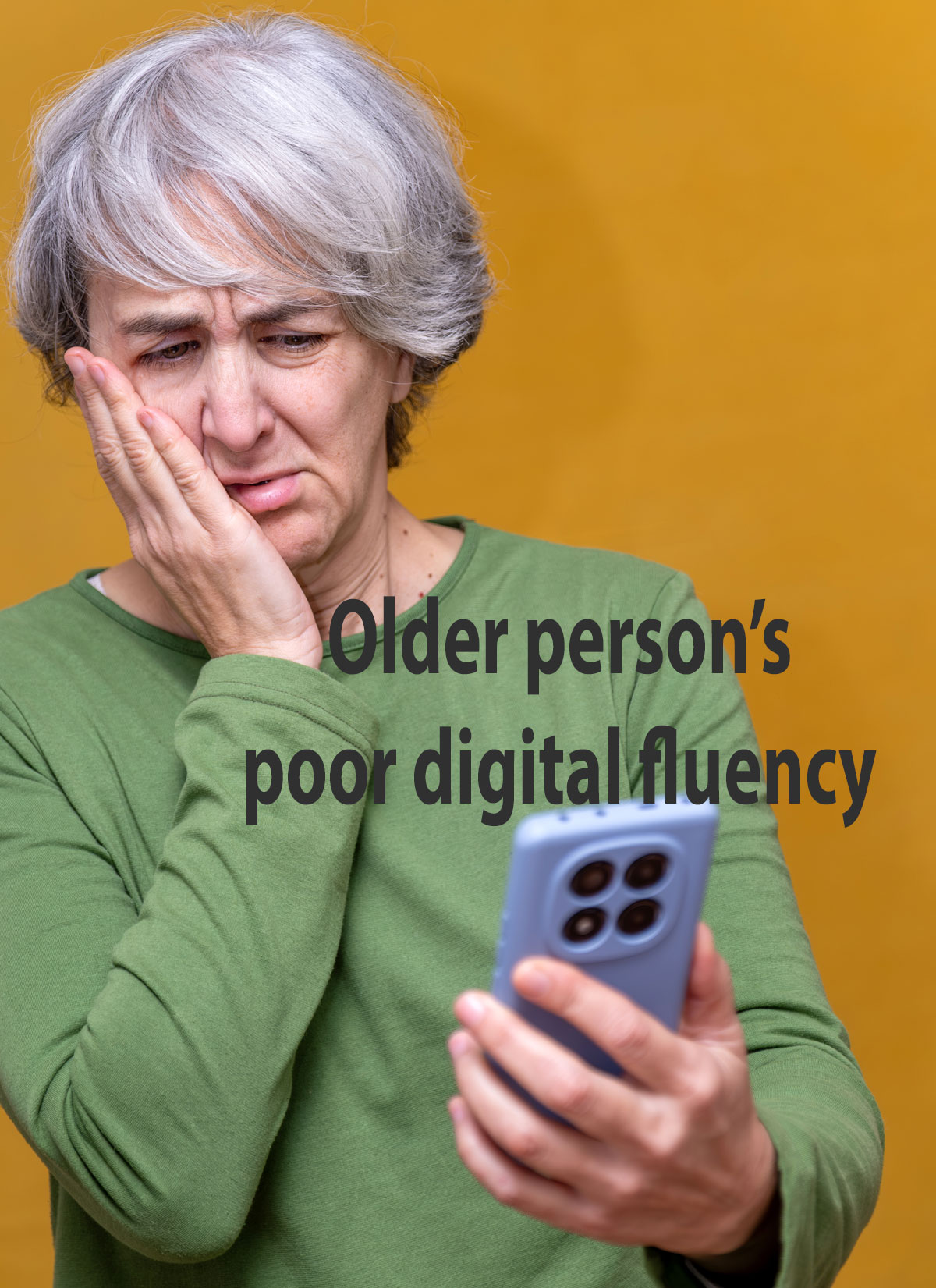
I couldn’t read the consent screen on the kiosk at my pharmacy. The font was smaller than my patience. The credit card reader was smaller than my smartphone. The prompts felt endless—and suspiciously designed to sell me something. Somewhere in that process, I was asked to sign something I couldn’t even see.
Later that same week, I found myself frustrated with a patient during a home-based Physical Therapy visit who couldn’t open an email I had sent her. Same problem. Different side of the table.
We live in a healthcare system that increasingly assumes digital fluency. Patient portals, telehealth, remote monitoring. App-based exercise programs. AI-driven tools. But here is the problem:
Digital healthcare requires digital fluency. Digital fluency is rarely taught.
I see this tension from both sides.
I am a baby boomer navigating healthcare as a patient—often feeling clumsy and behind.
I am a healthcare provider, sometimes frustrated when my patients struggle with the same tools I struggle with.
That contradiction is uncomfortable. And revealing.
Debbie Digit
During a home-based physical therapy visit, I asked a patient—let’s call her Debbie—if she had watched a video I sent to her email demonstrating how to safely get to and from the floor.
“I didn’t get an email,” she said. We checked her phone. No email. After a few minutes, I realized she was looking at her text messages—not her email. We found her email app together. Actually, one of them had more than one. Eventually, we found the message. She tapped the link. The video was buffering. One bar of cell signal.
I asked if she could connect to Wi-Fi. She looked at me and said, “How do I do that?” At that moment, the real problem became obvious. It wasn’t motivation. It wasn’t cognition. It wasn’t even physical ability. It was digital fluency. Digital fluency is the ability to confidently, critically, and creatively use digital tools to solve problems, create new content, and adapt to emerging technologies.
Debbie is a retired middle school principal with multiple college degrees. She is intelligent, capable, and engaged in her care. But she never took too formal courses in computer science. The only digital technology course Debbie and I took was typing. Of course, typing is useless on smartphones.
The Hidden Barrier – Catch 22

We often talk about barriers to healthcare access, costs, transportation, and insurance coverage. But we rarely talk about distinctive barriers for the older person.(Khan et al., 2026) The ability to use technology is required to access care. Digital fluency is now a prerequisite for participation in modern healthcare. If you can’t navigate apps, email, Wi-Fi, passwords, artificial intelligence platforms, or interfaces, you are functionally locked out.
Digital health tools can improve outcomes. But the older people who are in greater need of medical care and who might benefit the most are often the least able to use them. You need digital fluency to access digital healthcare. But digital fluency is rarely taught in any formal, structured way. That’s the paradox.
And Evidence Says These Digital Tools Work
There is growing evidence that digital health interventions can support behavior change, reduce pain, and improve function. (Valentijn et al., 2022) But that benefit only exists if the patient can access and use the tool. Otherwise, the intervention never really begins.
A Missed Opportunity
In Debbie’s case, I made a decision. I saw the barriers coming in layers of usernames, passwords, and multifactor authentication processes. And I decided, at that moment, that the squeeze wasn’t worth the juice. So, I moved on. In doing so, I helped her complete a task that day. But I missed the opportunity to change her trajectory.
What If We Treated This Like Any Other Deficit? If a patient lacks strength, we prescribe exercise. If a patient lacks mobility, we guide movement. But when a patient lacks digital fluency, we often work around or avoid it entirely.
What if we didn’t? What if improving digital fluency was seen as part of care—not outside of it? Teaching a patient to watch a video helps them today. Teaching a patient how to connect to Wi-Fi, find their email, open a link …helps them access an entire ecosystem of care. Not just one video. Not just one visit.
Opportunity
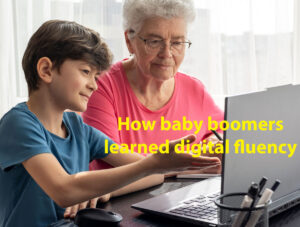
I wondered if there is an equivalent program for adults to develop digital fluency, as there is a program for adults to develop reading fluency, like GED courses. An internet search using keywords learning digital fluency and zip code identified several in-person digital education programs at libraries and non-profit associations.
There are early models showing this can work—digital coaching, community-based training, even home visits focused on building digital skills. (Berglund Kristiansson et al., 2025) I can envision an older person’s desire for a digital coach as an entrepreneurial opportunity for a young person looking for a side gig.
Final Thought
I left Debbie’s house that day having solved the immediate problem. But I’ve thought about that visit many times since. Because the real issue wasn’t whether she could get up from the floor. It was whether she could access the tools that might help her avoid the fall in the first place.
Showing a patient what to do helps for a day.
Teaching them how to access the tools to learn helps for a lifetime.

References:
Berglund Kristiansson, E., Aberg, C., Dahl Aslan, A. K., & Berglund, M. (2025). Older persons' experiences of one-to-one in-home support for their digital needs: A qualitative study of a Digital Coach service. Digit Health, 11, 20552076251384828. https://doi.org/10.1177/20552076251384828
Khan, S., Webster, S., Puxty, J., & Robertson, M. (2026). Key Challenges and Barriers to Digital Literacy for Older Adults: Scoping Review. JMIR Aging, 9, e80647. https://doi.org/10.2196/80647
Valentijn, P. P., Tymchenko, L., Jacobson, T., Kromann, J., Biermann, C. W., AlMoslemany, M. A., & Arends, R. Y. (2022). Digital Health Interventions for Musculoskeletal Pain Conditions: Systematic Review and Meta-analysis of Randomized Controlled Trials. J Med Internet Res, 24(9), e37869. https://doi.org/10.2196/37869
The information on this website is not intended or implied to be a substitute for professional medical advice, diagnosis, or treatment. You are encouraged to perform additional research regarding any information available through this website, with other sources, and consult with your physician