
Which Side of the Bed After Orthopedic Surgery? A Simple Rule to Reduce Pain Getting In & Out
Historically, the protocol for orthopedic joint replacement surgery was an overnight stay in the hospital the day of the surgery. Now, the majority of elective orthopedic surgeries are done as outpatient and discharged to home the day of surgery.
Right after elective orthopedic surgery, getting in and out of bed, chairs, and toilets can be challenging and painful.
Beds at home do not have features that a hospital bed has:
- Access to either side of the bed
- Ability to raise or lower the bed
- Bedside rails.
- Adjustable bed feature to elevate the head to a semi-recline position of 45° from horizontal.
Being able to choose which side of the bed to get in and which side to get out of can significantly affect how easy and painful the process is after orthopedic surgery.
The first step in planning for the first night home from orthopedic surgery is to determine whether it is expected to be more difficult to get into the bed or to get out of the bed.
A bed, couch, or recline that is relatively low is likely going to mean difficulty getting out.
A relatively high bed is likely going to mean difficulty getting in.
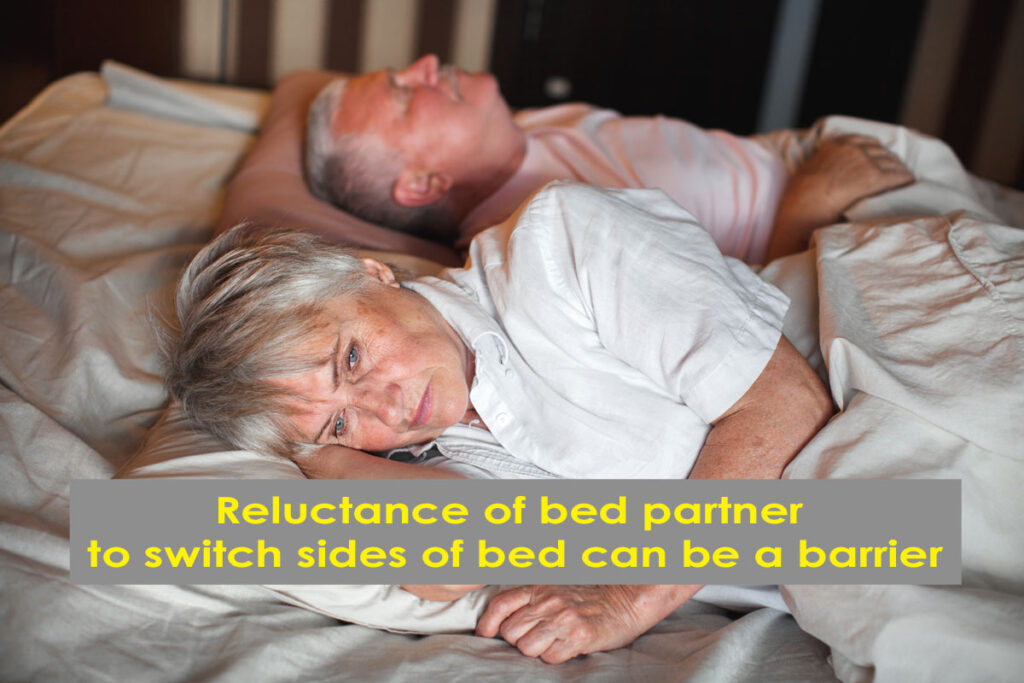
A barrier for some in choosing which side of the bed to get in and which side of the bed to get out can be reluctance of their bed partner to switch sides of the bed. When this barrier arises, I facetiously recommend the couple consider couple counseling.
If one side of the bed is against a wall or the bed partner cannot change sides of the bed, then pre-surgical consultation with a Physical Therapist can help solve this barrier.
Next, the general rule after orthopedic surgery when making a transfer to and from bed is to “lead with the good side”. Right after surgery, the non-surgical side is considered the good side.
The following tables use the descriptor of “Driver’s side”; when lying in bed, looking towards the foot of the bed is the left side. Whereas the “Passenger side” is when lying in bed looking towards the foot of the bed is the right side of the bed. The process assumes the mattress is NOT twin size, so entry and exit likely will occur on the same side.
The tables below outline the decision process for choosing which side of the bed to get in to minimize pain after orthopedic surgery.
Hip or Knee Surgery
| Difficult getting in bed | Difficult getting out of bed | |
| Right side Surgery | Choose to get in the Passenger side of the bed
May need foot stool |
Choose to get in the driver’s side of bed
May need bedside rail |
| Left Side Surgery | Choose to get in the driver’s side of the bed
May need foot stool |
Choose to get in on the passenger side of the bed
May need bedside rail |
Choosing which side of the bed may not be enough to address the difficulty and pain of getting in and out of bed. Using adaptive devices described below can help ease the difficulty and decrease the pain experienced with transferring into and out of bed.
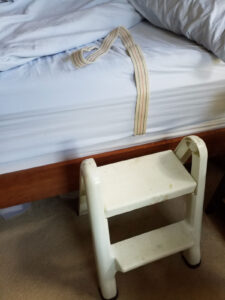
Footstool to assist with getting in bed. Belt to pull on when moving in bed.
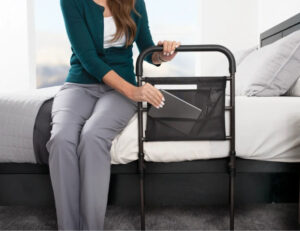
Bedside Rail
Shoulder surgery
Right after shoulder surgery, sleeping in a semi-reclined position 45° from horizontal is less painful. Sleeping in a recliner chair is less painful. Often, couches or recliners are relatively low and difficult to get out of without using your arms. Getting out of a recliner chair with one arm may be difficult and painful. Consider using relatively inexpensive chair raisers.
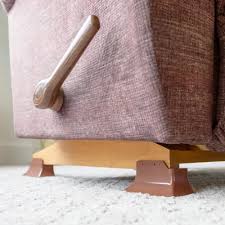
Chair risers on a recliner to raise the seat height, making it easier to get out of the chair with one arm.
If you do not have a recliner chair to sleep in, consider the temporary use of a bed wedge to achieve the semi-recline position.
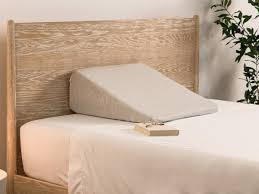
Bed wedge semi-recline 45°
After shoulder surgery, sleeping in bed, the principles of leading with the non-surgical side and choosing the easier side of the bed apply.
| Difficult getting in bed | Difficult getting out of bed | |
| Right side Surgery | Get in the Passenger side
May need foot stool/belt May need bedside rail May need hanging purse, saddle bag on headboard for phone, TV remote control. |
Get in the driver’s side.
May need bedside rail. |
| Left side Surgery | Get in on the driver’s side.
May need foot stool. May need bedside rail. May need a hanging purse or saddle bag on bed headboard for phone, TV remote control. |
Get in on the Passenger side.
May need bedside rail. |
Summary:
Decide whether getting in bed is more difficult or getting out of bed.
Choose either the driver’s side or the Passenger side to get in and out of bed.
When getting into or out of bed, lead with your non-surgical side.
Consider adaptive transfer aids.
The information on this website is not intended or implied to be a substitute for professional medical advice, diagnosis, or treatment. You are encouraged to perform additional research regarding any information available through this website, with other sources, and consult with your physician