
Can a Physical Therapist Give a Second Opinion by Telehealth?

Recently, I was asked by a patient in another state to provide a second opinion about the Physical Therapy she was receiving. I’ll call her Penelope.
Penelope is a woman in her thirties with a 13-month history of non-traumatic left lower abdominal, back, and buttock pain. She had been receiving Physical Therapy for “sacroiliac joint dysfunction.” Her treatment includes joint mobilization and manipulation, trigger-point massage including pelvic-floor muscles, cupping, core strengthening, and supportive garments.
A telehealth second opinion gave me an opportunity to review the diagnosis and treatment from afar and ask questions.
Does the diagnosis and treatment strategy adequately explain the patient's symptoms?
Penelope reminded me of a similar patient I saw early in my career. I will call the previous patient Olivia. Olivia was a runner in her thirties with abdominal, low-back, and buttock pain. I treated her for what I thought was a musculoskeletal problem involving myofascial trigger points in the back muscles and hip muscles. Eventually, her problem was resolved when an ovarian cyst ruptured and required surgery.
That mistake changed how I approach patients seemingly with musculoskeletal complaints.
Now I strive to routinely complete a physiologic systems review because symptoms that appear to be musculoskeletal may involve another physiologic system or more than one. Rather than immediately explaining a patient's symptoms with the diagnosis that seems most familiar, I try to ask what else could explain the symptoms. That question became particularly important with Penelope.
The diagnostic imaging complicated Penelope’s story
During our telehealth visit, Penelope shared the results of previous diagnostic testing.
Her imaging had identified findings involving two different physiologic systems.
One was a Pars articularis defect/stress reaction of the left lumbar 5th vertebra & 1st sacral vertebra.
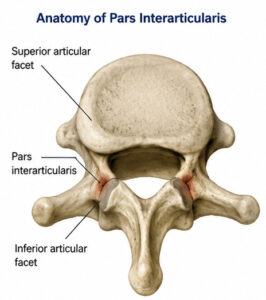
Pars Defect
The other was a dilated left ovarian vein on CT scan, interpreted as consistent with pelvic congestion syndrome (PCS). A subsequent transabdominal/transvaginal ultrasound, however, did not identify an abnormality.
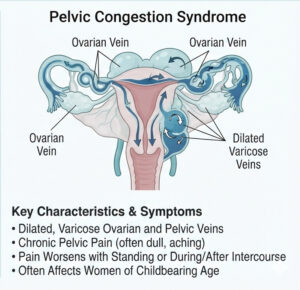
The conflicting diagnostic imaging findings immediately complicated the clinical picture.
As a Board-Certified Orthopedic Physical Therapist, I felt comfortable discussing the lumbar finding. I was much less familiar with PCS.
That feeling of uncertainty is useful.
It reminded me that a second opinion is not necessarily about knowing the answer. Sometimes it is about recognizing when the original explanation may be incomplete and determining what questions to ask next.
Could pelvic congestion syndrome explain some of her symptoms?
PCS can cause chronic pelvic or lower abdominal pain associated with enlarged pelvic veins. Reported symptoms can worsen with prolonged standing, sitting, bending, or reaching forward, and may improve when lying down.
Penelope described a symptom pattern that overlapped with these features.
Her conflicting imaging also raised an important question. A negative follow-up imaging study does not necessarily eliminate PCS. Diagnostic imaging for PCS can be challenging, and factors such as patient position, hydration, and hormonal variation may result in false negative findings. [1], [2]
For Penelope, the next appropriate step was not for me to diagnose PCS through telehealth. Instead, it was to question whether seeking a second opinion regarding resolving the conflicting diagnostic imaging results. And to question whether the vascular physiologic system, alongside her musculoskeletal symptoms, deserved attention.
A Physical Therapist providing a second opinion does not need to become the patient's physician. The role can be as a team member that can identify clinical questions that deserve further investigation.
What about the sacroiliac joint?
Penelope's treatment had been directed in part toward presumed sacroiliac joint dysfunction.
Yet her radiographs, CT scan, and MRI had not identified pathology involving the sacroiliac joint. Her treating Physical Therapist based the diagnosis on clinical examination, using range-of-motion testing, palpation and pain provocation. This diagnostic process is also fraught with false negative and false positive results. [3]
After several months of treatment including SI joint mobilization/manipulation and core stabilization exercises, her symptoms have not improved.
That made me question whether continued treatment directed specifically at the SI joint was justified.
This does not mean that manual therapy is never useful. It means that when a treatment has been repeated for months without meaningful improvement, the diagnosis and treatment strategy deserve to be questioned.
A second opinion can provide an opportunity to ask that question without necessarily criticizing the treating therapist.
Looking at movement without assuming movement is the diagnosis.
The American Physical Therapy Association identifies the movement system as central to Physical Therapist practice. The movement system reflects the interaction of multiple physiologic systems that allow the body to produce and maintain movement. [4]
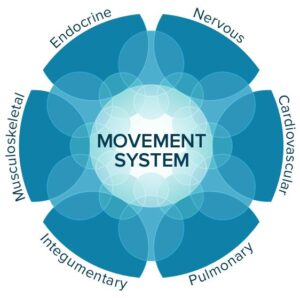
That concept was useful in Penelope's case.
If her symptoms were aggravated by prolonged sitting, standing, bending, or reaching forward, perhaps the question was not simply, “which joint is dysfunctional?”
Instead, which movements and direction of movements reproduce her symptoms, and how can those movements be modified while the underlying problem is being clarified?
For example, tactics might include:
- Squatting rather than repeatedly bending forward from the trunk when lifting.
- Using a hip hinge or “golfer's lift” to lift lightweight objects from the ground.
- Modifying a workstation to reduce prolonged sitting, standing, or reaching.
- Using adaptive equipment such as a Reacher when appropriate.
- Exploring whether initiating forward movement from the hips rather than repeatedly flexing the trunk changes symptoms.
These are not treatments for PCS itself. They are examples of movement tactics that might reduce symptom provocation while the larger diagnostic picture is being sorted out.
Don’t overlook the interaction between diagnoses.
Penelope also had a lumbar pars defect, and she reported she has generalized joint hypermobility syndrome.
This raises another question.
Could the different diagnoses be related, or could they simply be coexisting findings?
Hypermobility syndrome is a connective tissue disorder. Connective tissues are found throughout the body. Connective tissue disorders affect multiple physiologic systems.
Hypermobility syndrome is recognized as a contributing factor to PCS.
Hypermobility syndrome introduces an increased risk for Par articular defect.
Imaging findings are not automatically the source of symptoms. Both Pars defects and PCS can be seen incidentally during diagnostic imaging studies. Both are frequently found in diagnostic imaging studies but are not symptomatic. The challenge is determining which findings are clinically meaningful.
This is where history and examinations, including motion analysis, remain essential.
For example, if core strengthening is being used to address the lumbar problem, how is the exercise being performed? Is breath-holding or a Valsalva maneuver being used? Because the Valsalva maneuver can substantially increase intra-abdominal pressure, provoking pain related to PCS. [5] It may be reasonable to consider whether breathing strategies during exercise influence Penelope's PCS symptoms. [6]
Penelope’s pelvic back hip pain is chronic and complex.
What can a second opinion by a Physical Therapist via telehealth provide?
In Penelope's case, I did not provide a new definitive diagnosis nor an optimal intervention.
Instead, I provided several testable hypotheses:
- If the medical team pursues further evaluation of pelvic congestion, then it may clarify discrepancies between the diagnostic imaging findings.
- If the care team discontinues treatment targeting SI joint dysfunction, then it may allocate resources more appropriately.
- If the physical therapist utilizes a movement system model, then tactics to mitigate symptoms can be applicable.
- If the patient avoids holding her breath during core stabilization exercises, then she may reduce symptoms of pelvic congestion syndrome.
- If pain management team members communicate directly rather than engage in triangular communication with conflict, then they may improve care coordination.
Penelope's case is still being sorted out.
For patients, telehealth second opinion offers having another independent clinician listen to history, review previous imaging, interventions, and ask whether the current diagnosis and treatment still make sense.
For a Physical Therapist, telehealth second opinion can mean having another experienced clinician challenge assumptions, identify gaps in the differential diagnosis, or suggest questions that deserve further investigation.
Telehealth expands the possibilities to receive an independent second opinion.
A good second opinion does not always provide a new diagnosis or new treatment. Sometimes it provides a better set of questions and alternative hypotheses.
Telehealth makes it possible for a Physical Therapist to contribute a second opinion for a patient and/or a Physical Therapist even when the patient and therapist live in different states.
Yes, a Physical Therapist can give a second opinion via Telehealth.
References:
- Durham JD, Machan L. Pelvic congestion syndrome. Semin Intervent Radiol 2013;30(4):372–80 doi: 10.1055/s-0033-1359731.
- Peric V, Ferenc T, Bratic T, et al. Controversies in treating nutcracker syndrome. CVIR Endovasc 2025;8(1):26 doi: 10.1186/s42155-025-00544-z [published Online First: 20250328].
- Saueressig T, Owen PJ, Diemer F, Zebisch J, Belavy DL. Diagnostic Accuracy of Clusters of Pain Provocation Tests for Detecting Sacroiliac Joint Pain: Systematic Review With Meta-analysis. J Orthop Sports Phys Ther 2021;51(9):422–31. doi: 10.2519/jospt.2021.10469 [published Online First: 20210701].
- Sahrmann S. The How and Why of the Movement System as the Identity of Physical Therapy. Int J Sports Phys Ther 2017;12(6):862–69 [published Online First: 2017/11/22].
- Blazek D, Stastny P, Maszczyk A, Krawczyk M, Matykiewicz P, Petr M. Systematic review of intra-abdominal and intrathoracic pressures initiated by the Valsalva manoeuvre during high-intensity resistance exercises. Biol Sport 2019;36(4):373–86 doi: 10.5114/biolsport.2019.88759 [published Online First: 20191017].
- Hernandez-Lucas P, Escobio-Prieto I, Moro Lopez-Menchero P. Effects of Hypopressive Techniques on the CORE Complex: A Systematic Review. Healthcare (Basel) 2025;13(12) doi: 10.3390/healthcare13121443 [published Online First: 20250616].
The information on this website is not intended or implied to be a substitute for professional medical advice, diagnosis, or treatment. You are encouraged to perform additional research regarding any information available through this website, with other sources, and consult with your physician