Search results for: Pain movement
Physical Therapy Telehealth: It works well for some, not for others

The COVID 19 pandemic crisis has many challenges for the standard everyday health care and medicine. The pandemic resulted in a sudden increase of telehealth services. There are reports there has been an 18% increase in the number of healthcare providers providing telehealth services in response because of the pandemic. Healthcare providers and patients are…
Read MoreLow-Tech Slow-Motion Analysis – “Dance Step to Nowhere
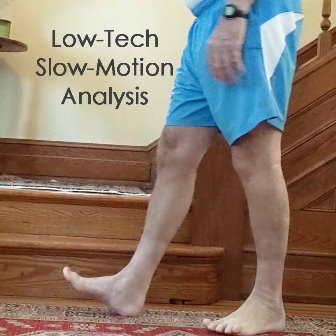
NDeviant movement during walking contributes to the development of or compensation for musculoskeletal pain syndromes. Diagnosis and treatment occur with visual observation and analysis of gait. The use of a smartphone video facilitates the analysis of motion walking. However, there are times when less technological motion analysis is necessary. When dealing with painful musculoskeletal syndromes…
Read More“Deme Bones” – Regional interdependence
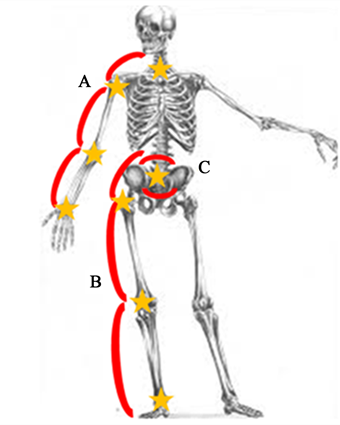
The common reframe from the old spiritual song “dem bones” is the “toe bone is connected to foot bone”. In the medical community this concept of mechanical connectiveness is referred to as “regional interdependence”. Regional interdependence is seemingly unrelated impairments in remote anatomical regions of the body may contribute to and be associated with a…
Read MoreTotal Knee Joint Replacement – Are You Satisfied? Gait Analysis & Training Can Provide Post-Op Improvements
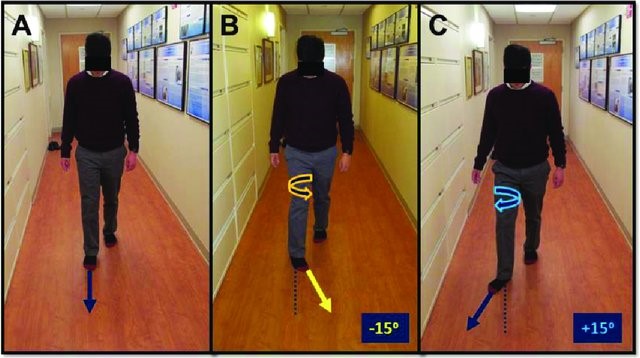
Pain and stiffness associated with osteoarthritis in knee joints can result in a limp, gait deviations and gait compensations. Gait deviations are variations from what is perceived as normal walking or running. These deviations are described as limitations, restrictions or weaknesses that lead to lack of mobility, stability or symmetry of movement. Gait deviations also…
Read MoreSlow motion video (Smart Phone) analysis is under-utilized, & under-valued
Being an old Physical Therapist I have had the good fortune of being around to observe significant changes and advances in the technology available to perform motion analysis. When I began analyzing the gait of runners many years ago, I used analog video cameras which required large VHS tapes and separate VCR playback units. The…
Read MoreThat’s a Stretch: Why Stretching May Not Always be the Solution
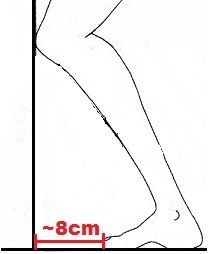
It’s good to stretch a dollar. It’s bad to stretch the truth. But what about stretching your calves? That might depend on whether you believe Dr. Google every time a search result says to stretch sore calves. Calf stretching aims to increase the range of motion (ROM) for ankle dorsiflexion. “Dorsi” is a prefix meaning…
Read MoreLateral Pelvic Tilt Sitting
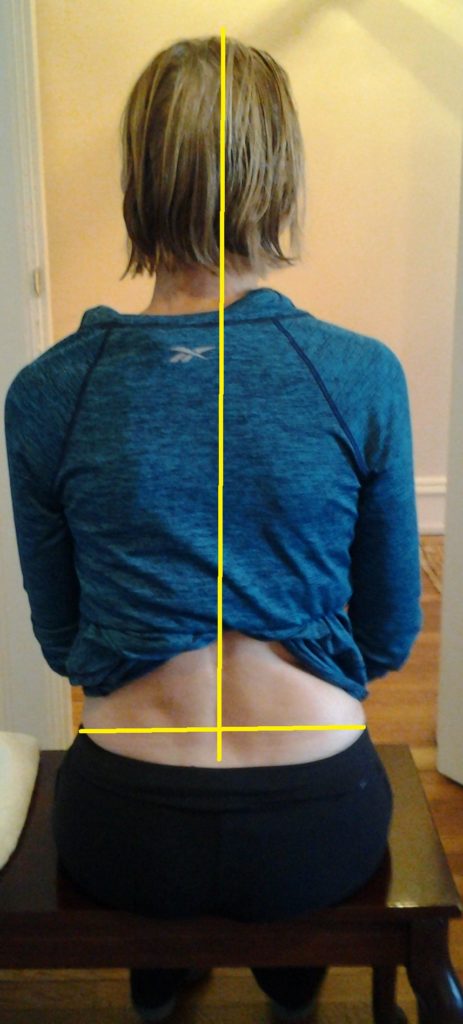
When oriented normally, the pelvis appears level and symmetrical. But in individuals with a lateral pelvic tilt (also called pelvic obliquity), one side of the pelvis appears lower than the other side. Lateral pelvic tilt can both cause and compensation to avoid musculoskeletal pain. It can be a contributing factor to jaw pain, headaches, shoulder,…
Read MoreIT Band Syndrome – Controversy Regarding Stretching Exercise
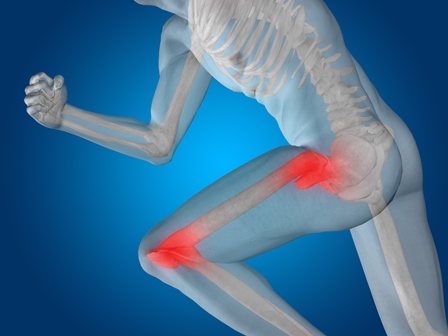
The Iliotibial (IT) Band is a tendon on the lateral aspect of the hip/thigh/knee. It is a large, wide, thick tendon. A tendon is a structure that attaches muscle to bone. IT band syndrome is a typical injury occurring in runners. A commonly recommended treatment for IT band syndrome is stretching exercise. Searching Google for…
Read MoreShoes too big for foot contributes to injury
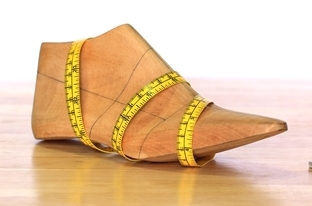
A majority of all people are in shoes that are incorrect shoe size according to Fawn Evenson director of the Footwear Industries of America. There are two potential errors when selecting what size shoes to wear. Either the shoe will be too small for the foot or too large for the foot. In my experience…
Read MoreCuing to Alter Gait Deviation of Too Long a Step
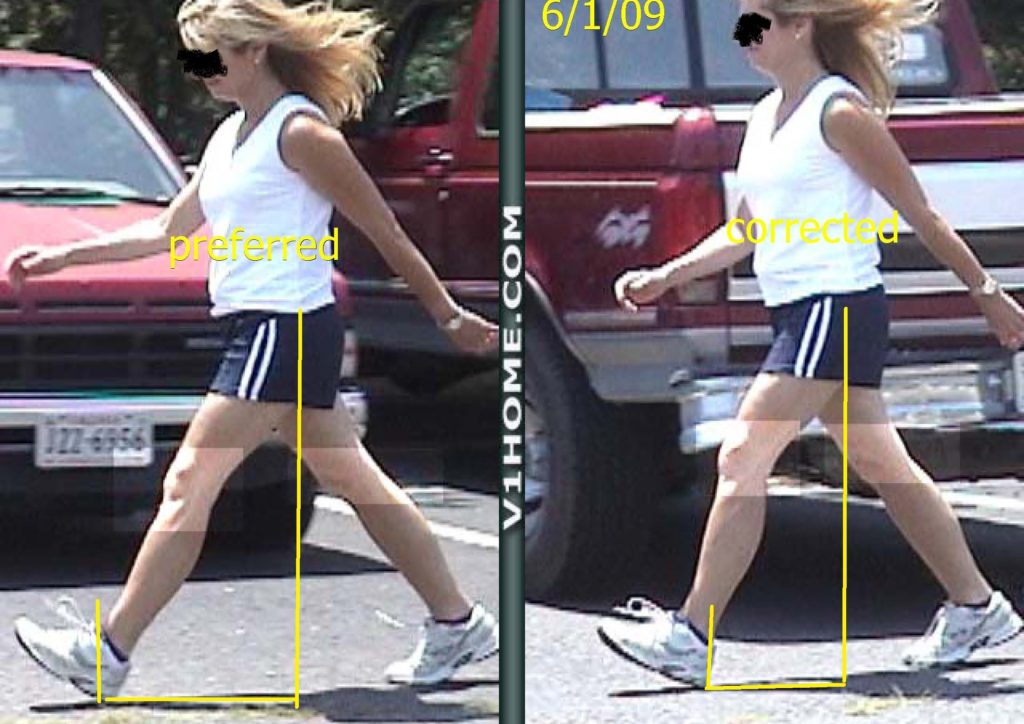
Cuing to Alter Gait Deviation of Too Long a Step Mathematics helps explain walking or running faster. Step length X steps per minute = speed. In order to move faster there are 3 opportunities take longer steps or strides, increase the steps/minute (cadence), or do both longer steps and a faster cadence. Taking longer steps/stride…
Read More