
Breaking the Pain – Loneliness Cycle: Small Steps Toward Connection & Recovery
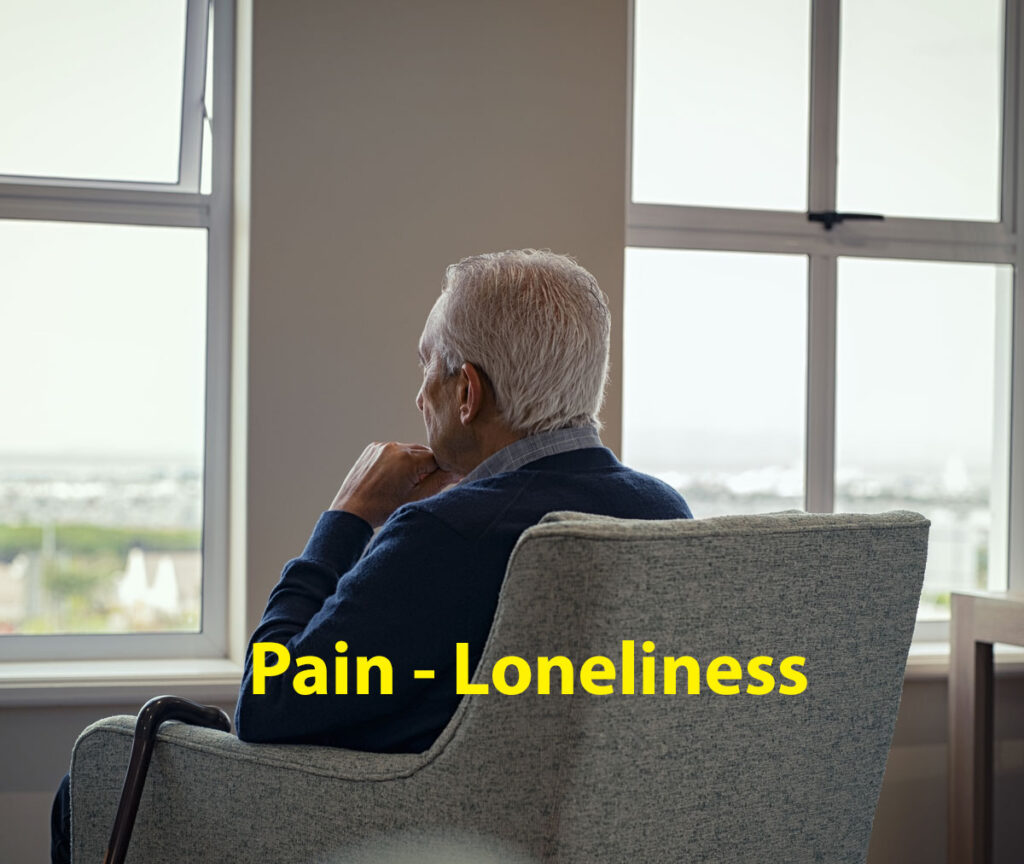
What if some of what we call “nonproductive” time in healthcare is actually contributing to health, and what does that mean for physical therapists who treat people whose worlds have become smaller because of chronic pain?
Earlier in my career, I worked in an outpatient Physical Therapy clinic where productivity demands often left little time for the conversations that mattered to some patients. I noticed that once physical goals were met, a few people, especially the elderly patients, were reluctant to end therapy. Not simply because of symptoms, but because Physical Therapy had become one of their few reliable reasons to leave home and connect with another person.
Working in a corporate healthcare system was frustrating because time spent building rapport through conversation or small talk was not billable. As a result, giving patients that valuable social connection could conflict with my supervisor’s productivity expectations. I found myself wishing there was an insurance billing code for addressing loneliness.
I have solved the insurance billing code problem and satisfying corporate supervisors by switching to a cash-based solo practice.
However, I remain a bit frustrated, as Physical Therapy education did not adequately address the individual’s barrier to participating in movement in function is the emotional feeling of loneliness.
Recent Case Examples
“Louise Lonesome” is a 15-year-old with complex regional pain syndrome and Ehlers-Danlos syndrome who experiences widespread pain. She lives with her single mother and transitioned to homeschooling because of her health challenges. She reports spending much of the day in bed or on the couch. Although she has a new puppy, she feels afraid to take the puppy outside for walks. She participates in virtual mental-health counseling.
“Annie Alone” is a 90-year-old with multi-joint osteoarthritis that flares intermittently. She is legally blind due to macular degeneration and has significant hearing loss. She lives in a basement apartment in her daughter’s home. At her initial visit, she said, “It has been a rough year. My sister died, my daughter has cancer, and I have outlived most of my friends.”
Both Louise and Annie have chronic pain and are homebound. Louise is an example of social restrictions and potentially reduced social connections. Anne is an example of expressed loneliness.
These patients and others have stimulated me to search to learn more and gain a better understanding of the connection between chronic pain and loneliness.
What is chronic pain?
Chronic pain is a term that oversimplifies a very complex problem. Chronic pain is a multi-faceted problem that includes:
- Biological – tissue damage, inflammation, genetics
- Psychological – behaviors, thoughts, emotions
- Sociological – environment, social support, access to care
- A whole-body problem, more than a body part that is damaged.
- A treatable problem
What is loneliness?
Loneliness is the distressing feeling of being alone, disconnected, or lacking a sense of belonging, even when surrounded by other people. It differs from physical isolation because a person can be completely alone and feel content, or be in a crowd and feel deeply lonely. [1]
Chronic pain and loneliness:
Loneliness and chronic pain share a two-way connection related to overlapping brain pathways. [2]
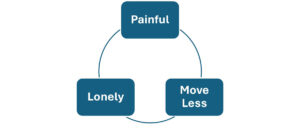
Persistent pain and loneliness are often linked in a self-reinforcing cycle. Pain can reduce mobility, confidence, work, recreation, and social participation. Loneliness and social disconnection may in turn be associated with greater pain, distress, poorer coping, depressed mood, sleep disruption, and reduced activity.
Research has shown that interventions designed to improve social interaction improve physical functioning associated with chronic pain. [3]
When faced with a complex problem such as chronic pain, sometimes the first step should be a small, easy step.

Take the Easier Step First
A small step to reach out and connect with someone may break the cycle between chronic pain and loneliness. If you can take simple steps to be less lonely, it may not eliminate pain, but increasing social connection may create conditions that make living with chronic pain more manageable. For some patients, changing the degree of social disconnection may be a more immediately achievable target than changing the intensity of chronic pain. It may be a more modifiable target right now.
What are tactics for a healthcare professional to address loneliness in individuals with chronic pain?
Encourage conversation regarding the emotion of loneliness. Talking about loneliness helps the healthcare professional or the patient accept and understand their feelings. It reduces shame, builds connections, and opens doors to healing and support.
Discussion regarding loneliness can be a sensitive topic. The term loneliness carries a negative connotation. Rather than asking, " Do you feel lonely, consider less threatening queries:
- Do you feel isolated or separated because of the pain?
- Has pain made it harder to do things that help you feel connected to other people?
- Who are the people you feel most supported by?
- Have you been able to participate in activities or groups that matter to you?
- Since your symptoms changed, have you felt more isolated?
- What would make it easier to get out of the house or connect with someone this week?
- Are there spiritual, cultural, recreational, volunteer, or community activities that you miss?
- Use motivational interviewing principles to help the patient identify a personally meaningful and achievable step toward greater social connection.
I now look for opportunities to integrate psychologically informed physical therapy into traditional movement-based interventions. [4]
When the patient’s team members include mental health professionals, I seek to collaborate with them. Otherwise, I encourage the patient to consider adding a mental health professional on the chronic pain care team.
What are tactics an individual in chronic pain can take to mitigate loneliness?
- Start Small: Choose something achievable this week rather than attempting to rebuild an entire social life.
- Connect-Reach Out: Reach out to one person rather than waiting until you feel less isolated.
- Seek Support: Reach out to a healthcare professional. Be open and honest with your healthcare professional about your emotions, health habits, and what is happening in your life.
- Move with Others: Walking, exercising, or participating in an activity with another person combines physical activity and connection. When walking the dog, it is easier to start a conversation with a stranger.
- Re-Enter Meaningful Activities: Recreation, volunteering, religious/spiritual activities, clubs, classes, etc. Volunteering builds social connections, creating a strong sense of purpose.
- Artificial Intelligence: may help a person brainstorm accessible local resources, draft a message to reconnect with someone, rehearse a difficult conversation, or generate questions to discuss with a clinician. They should not replace mental-health care, crisis support, or real human relationships.
Louise achieved some degree of success; she is now moving more, walking her puppy on a regular basis, and small talk with neighbors. Unfortunately, my attempts to collaborate and communicate with her mental health counselor is less effective triangular communication through Louise rather than directly with the counselor. The challenge of treating her chronic pain continues.
Despite significant vision and hearing loss, Annie continues to reach out for social connection with her family, and recently, she requested Physical Therapy visits. At 90, she’s a remarkable storyteller, and I genuinely look forward to our sessions. I make a point of encouraging her to share stories from her long, full life, and we end up laughing together. She is an example of the magnitude of loneliness that can vary.
Chronic pain can shrink a person’s physical and social world. As patients and clinicians, we may not be able to remove every barrier. But we can notice when pain has also become a barrier to belonging. A respectful question, a collaborative referral, or one small plan for social reconnection may help take a meaningful step toward greater participation and possibly a more manageable pain experience.
References:
- Hawkley LC, Cacioppo JT. Loneliness matters: a theoretical and empirical review of consequences and mechanisms. Ann Behav Med 2010;40(2):218–27 doi: 10.1007/s12160-010-9210-8.
- Loeffler A, Steptoe A. Bidirectional longitudinal associations between loneliness and pain, and the role of inflammation. Pain 2021;162(3):930–37 doi: 10.1097/j.pain.0000000000002082.
- Bannon S, Greenberg J, Mace RA, Locascio JJ, Vranceanu AM. The role of social isolation in physical and emotional outcomes among patients with chronic pain. Gen Hosp Psychiatry 2021;69:50–54 doi: 10.1016/j.genhosppsych.2021.01.009 [published Online First: 20210128].
- Coronado RA, Brintz CE, McKernan LC, et al. Psychologically informed physical therapy for musculoskeletal pain: current approaches, implications, and future directions from recent randomized trials. Pain Rep 2020;5(5):e847 doi: 10.1097/PR9.0000000000000847 [published Online First: 20200923].
The information on this website is not intended or implied to be a substitute for professional medical advice, diagnosis, or treatment. You are encouraged to perform additional research regarding any information available through this website, with other sources, and consult with your physician