Do Running Shoes Prevent Injuries? Revisiting Evidence Two Decades Later
Twenty years ago, runners were told that the “right shoe” could prevent injury.
Today, despite an explosion of research and technology, the answer remains surprisingly complicated.
In 2006, my blog post Evolution of the running shoe: evidence & opinion,” my central observation was that runners often overestimated the role of footwear in injury risk. Shoes occasionally contributed to injury—particularly when defective or poorly fitted—but they were rarely the sole cause. Training load, fitness level, and running mechanics appeared far more influential.
Changes in scientific evidence regarding running shoes - Injury:
There has been an exponential increase in the volume and quality of scientific research related to running shoes.
Between 1968 and 2006, research on this topic was limited, consisting of case studies and only a small number of randomized clinical trials.
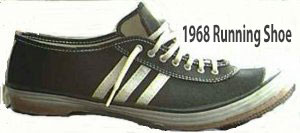
Old-style running shoe from 1968
In 2022, Nicola Relph and colleagues’ systematic review found 12 randomized controlled clinical trials of 11,240 runners focused on the risk of injury. (Relph et al., 2022) The review found NO reduction in lower-limb injuries when comparing different types of running shoes.
In 2025, Xiao and colleagues published a systematic review of 1,574 articles on running shoe research published between 2005 and 2024. (Xiao et al., 2025) Their key conclusions included:
- The annual publication on running footwear has steadily increased, especially after 2011.
- The design and type of running shoes significantly influence the kinematic characteristics of the knee and associated injury risk.
- The distribution of pressure and movement patterns during running is critical for maintaining lower limb health.
- The cushioning design of running shoes aimed at attenuating the impact on the foot, and the effectiveness of this design depends on the individual movement characteristics (i.e., foot strike pattern). Future research should consider how running shoe features would match individual differences, such as foot strike patterns and skill level.
Changes in scientific evidence regarding running shoes – Performance.
While evidence linking footwear to injury prevention remains inconclusive, the evidence for performance enhancement has become much stronger.
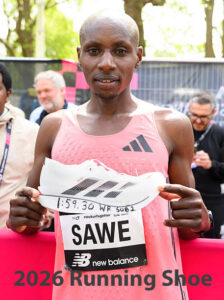
2026 Running Super Shoe - sub-2 hour marathon performance
A meta-analysis by Yang Xiao and colleagues, based on 17 randomized crossover clinical trials, concluded that advanced footwear technology (“super shoes”) provides a moderate performance advantage by improving running economy and race times. (Xiao et al., 2026)
Changes in how we purchase running shoes:
The most significant change over the past 20 years has been how people purchase running shoes.
A new process for buying running shoes.
Online shopping and AI tools are increasingly replacing—or supplementing—the traditional in-store salesperson for measuring foot size and recommending running shoes. The familiar Brannock foot-measuring device is now often supplemented by smartphone scanning apps, which make AI-based shoe sizing more accessible and convenient.
Choosing a running shoe with AI requires knowing which details to include in your prompt. In my view, the most useful factors are:
- Body Mass Index.
- History of previous injuries.
- Running experience/skill, novice, veteran, high school, etc.
- Desired event: hiking, marathon, middle distance, etc.
- Previous shoes which were uncomfortable/comfortable. (Agresta et al., 2022)
- Foot type - high arch, low arch.
- Foot strike pattern: forefoot, mid-foot, heel strike or “Gazelle v Glider.”

What prompts or queries should we use for artificial intelligence regarding shoe selection?
An example for an AI prompt/query is, given a female with a BMI of 19.5, high arch feet, mid-foot strike, history of IT band syndrome, veteran half-marathon runner, what are 4 different models of running shoes to select to avoid injury?
View the AI response with a healthy dose of skepticism. Does the AI information have an agenda or bias? Consider a hybrid approach, ask for a second opinion from a Board-Certified Sports Physical Therapist or a Pedorthist.
Twenty years later, science suggests running shoes matter—but not in the way many runners once believed. Shoes may influence comfort, biomechanics, and performance, yet injury risk remains multifactorial and highly individual. The future of footwear selection may involve AI and individualized recommendations, but clinical reasoning and runner experience still matter.
References:
Agresta, C., Giacomazzi, C., Harrast, M., & Zendler, J. (2022). Running Injury Paradigms and Their Influence on Footwear Design Features and Runner Assessment Methods: A Focused Review to Advance Evidence-Based Practice for Running Medicine Clinicians. Front Sports Act Living, 4, 815675. https://doi.org/10.3389/fspor.2022.815675
Relph, N., Greaves, H., Armstrong, R., Prior, T. D., Spencer, S., Griffiths, I. B., Dey, P., & Langley, B. (2022). Running shoes for preventing lower limb running injuries in adults. Cochrane Database Syst Rev, 8(8), CD013368. https://doi.org/10.1002/14651858.CD013368.pub2
Xiao, X., Lian, A., Li, Z., & Fan, Y. (2025). Trends and hotspots in running shoe research: a bibliometric study from 2005 to 2024. Front Sports Act Living, 7, 1609141. https://doi.org/10.3389/fspor.2025.1609141
Xiao, Y., Hu, X., Tian, D., & Qiu, A. (2026). Effects of Advanced Footwear Technology on Running Economy and Endurance Performance: A Meta-Analysis. Int J Sports Med, 47(2), 81–94. https://doi.org/10.1055/a-2637-7283
The information on this website is not intended or implied to be a substitute for professional medical advice, diagnosis, or treatment. You are encouraged to perform additional research regarding any information available through this website, with other sources, and consult with your physician